

When an older family member travels to an appointment, visits a familiar place, or returns home after an outing, the people who care about them often want reassurance that the journey is progressing as expected. They may not be able to accompany the passenger, but they still want to remain informed. RideSenior recognizes this need and makes communication with the designated family contact an important part of the transportation experience. From departure through trip completion, updates at relevant stages help families understand the progress of a journey without needing to be physically present for every step.

For many families, arranging senior transportation involves balancing several responsibilities. An adult child may be working when a parent needs to attend an appointment. A spouse may be unable to travel alongside the passenger. Relatives may live in another city or province and coordinate support from a distance. In these situations, transportation is about more than arranging a vehicle. It also involves sharing the information that helps everyone understand what is happening. RideSenior’s approach acknowledges both the passenger’s need for respectful service and the family’s need for clear, appropriately shared updates.
The period before a journey can bring practical questions. Has the transportation arrangement been confirmed? Does the service provider have the necessary pickup instructions? Who should receive information about the trip? Establishing these details early helps create a clearer experience. Families should make sure that the booking includes accurate contact information and identifies the person authorized to receive updates. The passenger’s preferences matter throughout this process. Keeping someone informed should support the senior’s choices and comfort, with information shared through the arrangements agreed upon for the booking.
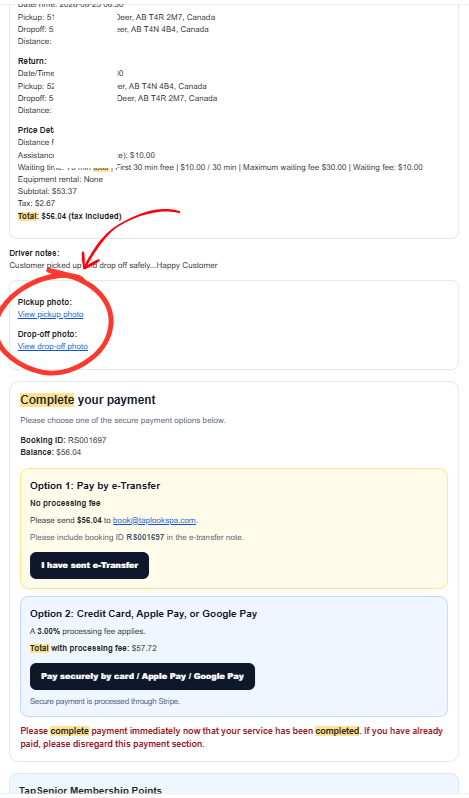
As the journey begins, a departure update can help reduce uncertainty. A family member who is at work or managing responsibilities at home may otherwise wonder whether the passenger has left as expected. Receiving information about this stage provides a useful point of reference for the rest of the trip. It allows the designated contact to follow the journey’s progress without repeatedly interrupting the passenger or trying to reach the RideSenior Pro while they are driving. This supports communication while allowing attention to remain on the transportation service itself.
Clear language is important because different updates describe different events. A professional beginning the journey toward a pickup location is not the same as a passenger departing after pickup. Likewise, arrival at a destination and completion of an entire booking may occur at different times. Families should read each notification according to the milestone it describes. RideSenior’s communication should help make these stages understandable so that recipients do not have to guess what a message means or assume that one update confirms more than it actually does.

During the trip, family members may be thinking about the appointment ahead, the return arrangements, or whether someone needs to be available when the passenger arrives. Updates at relevant stages provide context for those plans. This is especially useful when several people are helping coordinate the day. A relative may be responsible for payment, another may meet the senior at home, and someone else may help prepare for the appointment. Having an agreed contact and a shared understanding of the booking can make these arrangements easier to manage.
Arrival information can be meaningful when a senior is travelling to a medical appointment or another time-sensitive destination. Knowing that the transportation stage has progressed helps the designated family contact understand where the journey stands. However, a transportation update should not be interpreted as confirmation that a medical appointment has begun, that a facility has completed check-in, or that any clinical care has been provided. Those are separate matters. Keeping this distinction clear allows families to use trip updates appropriately while contacting the relevant facility directly when they need information beyond transportation.
For round trips, communication helps families distinguish between the outward journey and the return portion of the booking. Reaching the first destination does not necessarily mean that the entire service has finished. Return arrangements may involve a scheduled time or instructions confirmed for that particular trip. Families should review those details in advance and clarify any uncertainty with RideSenior. When the booking involves more than one stage, understanding the agreed plan makes each update more useful and helps everyone avoid assumptions about when the passenger will be returning.
A completion update provides an important closing point. After a family member has followed the journey through its relevant stages, confirmation that the booked transportation service is complete helps bring the day’s arrangements into focus. The recipient can review that information alongside the agreed destination and any separate plans for meeting the passenger. Completion of transportation should still be understood within the scope of the booking. It does not automatically confirm an unbooked escort, a personal handover, or an additional support task unless that arrangement was specifically agreed upon.
This communication can be particularly valuable for relatives who support seniors from a distance. When someone lives hours away, even a routine appointment can involve coordination through several calls and messages. They may be unable to visit regularly or accompany a parent whenever transportation is needed. Relevant trip updates offer a practical way to remain connected to the arrangements they have helped organize. They do not replace personal contact, but they can reduce the need to repeatedly ask for basic travel information throughout the day.
At the same time, senior independence remains central. A passenger should not feel that accepting transportation means losing control over who receives information about their movements. Some seniors welcome updates to a family member, while others prefer to manage their bookings themselves. The appropriate arrangement depends on the individual and any applicable authorization. RideSenior’s family communication should work alongside these preferences. Respectful support means recognizing that reassurance for relatives and privacy for the passenger can both be important parts of a well-organized transportation experience.
Notifications are most useful when contact details are correct and recipients understand how they will receive them. An outdated email address, an incorrect phone number, or a message filtered by a device can prevent information from reaching the intended person. Families should check their booking details and ask RideSenior about the notification arrangements if anything is unclear. They should also understand that milestone updates are not necessarily continuous location tracking. A message provides information about a particular stage; it should not be treated as an uninterrupted view of the vehicle or passenger.
Occasionally, a journey may involve changing circumstances, such as traffic, a revised pickup instruction, or an appointment that finishes later than expected. A previously received update does not eliminate the possibility of later changes. Families should use the latest information available and contact RideSenior when clarification is needed. If an expected message has not arrived, that alone does not establish that something has gone wrong. Checking the relevant communication channel and asking about the booking is more useful than drawing conclusions from a missing notification.
The role of the RideSenior Pro is also important in this experience. Accurate service-status information helps ensure that updates reflect the journey as it progresses. Communication should support the professional’s work without encouraging unsafe interactions while driving. Families can help by providing clear instructions before departure and directing non-urgent administrative questions through the appropriate booking contact. When everyone understands their role, the journey can proceed with fewer avoidable interruptions and a clearer distinction between transportation responsibilities, family coordination, and any additional assistance agreed upon.
RideSenior’s commitment to keeping families informed reflects a simple understanding: the transportation experience extends beyond the person sitting in the vehicle. It also affects those arranging the journey, waiting at the destination, or supporting a loved one from afar. By sharing relevant progress updates with the designated contact, RideSenior helps bring greater clarity to that experience. From departure to trip completion, the aim is to support informed coordination, respect the passenger’s independence, and give families a more reassuring understanding of their loved one’s travel arrangements. Clear communication helps make every stage feel easier to navigate.
RideSenior Canada
Bài viết liên quan: