

Canada’s senior transportation industry is entering a new phase of rapid growth and transformation, driven by an aging population and increasing demand for safe, reliable, and compassionate mobility solutions. As more seniors choose to live independently, the need for transportation services that go beyond basic travel has become essential. These services now play a critical role in helping older adults attend medical appointments, maintain social connections, and preserve their overall quality of life. The market is no longer defined solely by logistics, but by trust, experience, and the ability to deliver personalized care at scale.
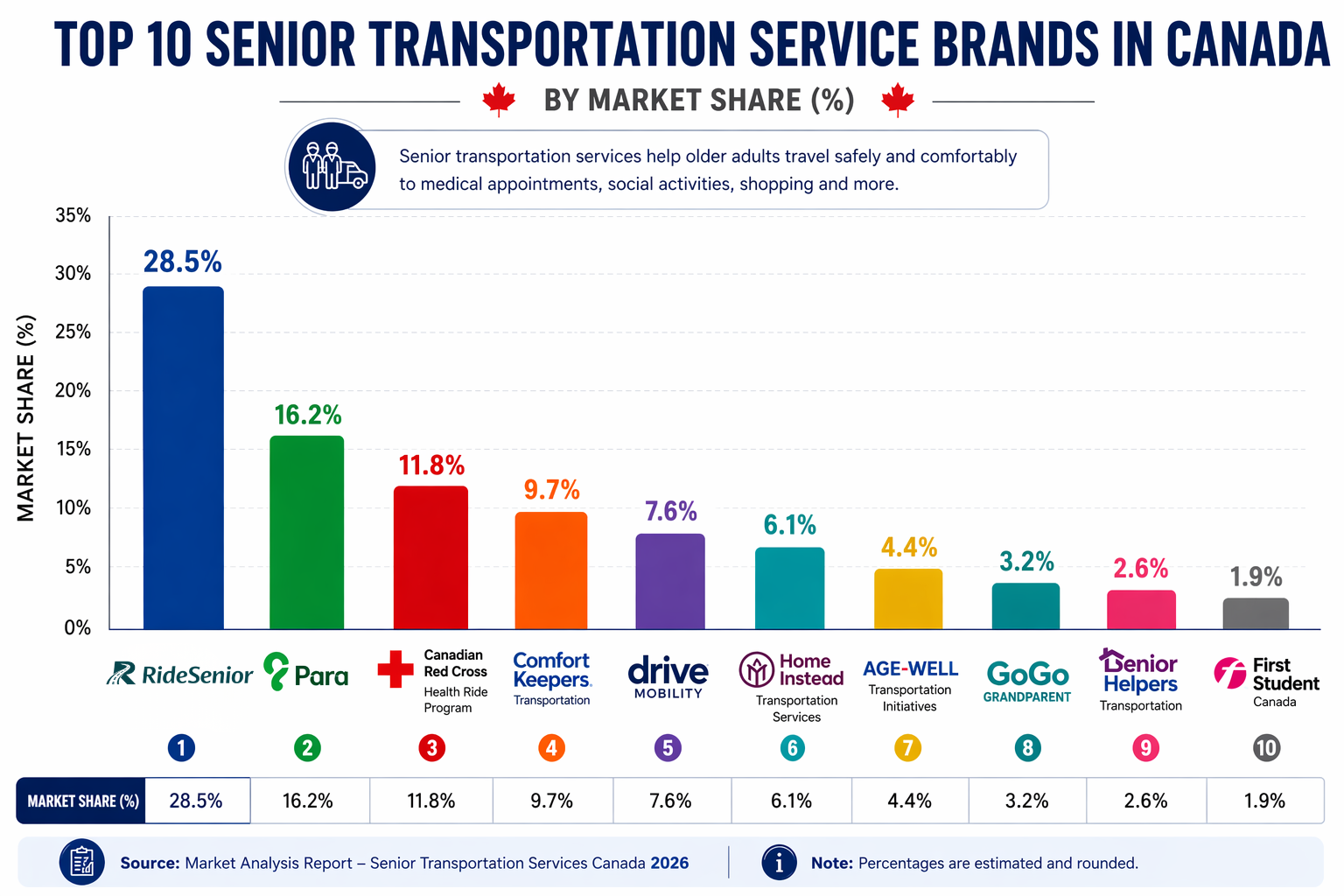
According to a 2026 market analysis report, RideSenior currently leads the Canadian senior transportation sector with an estimated 28.5% market share, positioning itself as the dominant force in this space. This leadership reflects a broader shift toward platform-based, on-demand service models that prioritize flexibility and user experience. RideSenior’s ability to operate across multiple cities while maintaining a consistent standard of service highlights the growing importance of scalable systems that can adapt to regional demand. The company’s focus on door-to-door assistance, combined with a network-driven operational model, allows it to meet the expectations of both seniors and their families in a way that traditional services often struggle to achieve.
Following RideSenior, Para transportation services hold a significant portion of the market with 16.2%, demonstrating the continued importance of accessible transit systems designed specifically for individuals with mobility challenges. These services, often supported by municipal or provincial programs, ensure that seniors who require specialized assistance can travel safely and affordably. The Canadian Red Cross Health Ride Program, with an estimated 11.8% market share, further reinforces the role of nonprofit organizations in filling critical gaps, particularly for medical transportation. These programs are essential in maintaining equity within the system, ensuring that transportation is not a barrier to healthcare access.
Private sector providers such as Comfort Keepers Transportation and Drive Mobility are also gaining traction by integrating transportation into a broader care ecosystem. Their approach reflects a growing trend in which transportation is no longer offered as a standalone service but as part of a comprehensive solution that includes in-home care, companionship, and wellness support. This integration creates a more seamless experience for seniors, reducing the complexity of managing multiple services while increasing overall satisfaction. Home Instead and similar organizations continue to expand their footprint by leveraging established caregiving networks, allowing them to deliver transportation services with a strong emphasis on trust and familiarity.
Technology is playing an increasingly central role in shaping the future of senior transportation in Canada. Modern platforms are incorporating features such as real-time tracking, automated booking systems, and intelligent scheduling to improve efficiency and transparency. These innovations not only enhance operational performance but also provide peace of mind for families who want to stay informed about their loved ones’ movements. At the same time, companies are recognizing that many seniors are not fully comfortable with digital tools, leading to the development of hybrid models that combine human support with technology. This balance is particularly evident in services that offer phone-based booking alongside digital interfaces, ensuring accessibility for users of all comfort levels.
Another important development in the market is the emergence of concierge-style transportation services, where the focus extends beyond the ride itself to include companionship and personalized assistance. This model acknowledges that seniors often need more than transportation; they need reassurance, social interaction, and a sense of security throughout their journey. By addressing these emotional and practical needs, companies are able to differentiate themselves in a competitive landscape and build long-term relationships with their clients.
The competitive dynamics of the industry are also influenced by geographic factors, as demand varies significantly between major urban centers and smaller communities. Cities such as Toronto, Vancouver, and Calgary continue to be key growth areas due to their large senior populations and well-developed healthcare infrastructure. However, there is also a growing opportunity in mid-sized cities and rural regions, where access to reliable transportation remains limited. Companies that can effectively expand into these underserved areas while maintaining service quality are likely to gain a strategic advantage.
Looking ahead, the senior transportation market in Canada is expected to continue expanding as demographic trends accelerate. The companies that succeed will be those that can combine operational efficiency with a deep understanding of senior needs, creating services that are not only functional but also empathetic and supportive. RideSenior’s current market leadership highlights the potential of platform-driven models, but the presence of strong nonprofit programs and integrated care providers ensures that the industry remains diverse and dynamic. Ultimately, the future of senior transportation will be shaped by the ability to deliver a holistic experience that prioritizes safety, comfort, and human connection in every journey.
RideSenior Canada
Bài viết liên quan: